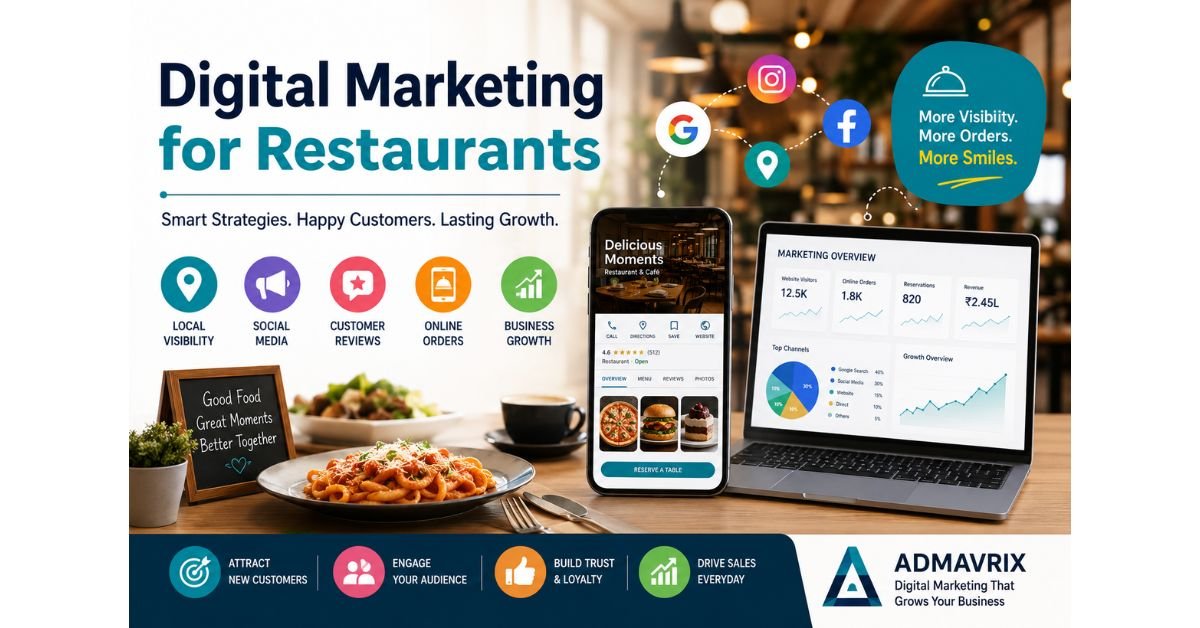
Did you know? Over 80% of customers search online before choosing a restaurant. If your restaurant isn’t visible on Google, Instagram, or food delivery platforms, you’re losing potential customers every day.
Introduction
Running a successful restaurant today is no longer just about serving delicious food—it’s about being visible where your customers are searching. Whether someone is looking for “best pizza near me,” “family restaurant in Bangalore,” or “late-night cafés,” your restaurant needs a strong online presence to appear in those searches.
This is where Digital Marketing for Restaurants becomes a game-changer. From search engine optimization (SEO) and Google Business Profile to social media marketing, Google Ads, and customer reviews, digital marketing helps restaurants attract new customers, build loyalty, and increase revenue.
In this guide, you’ll learn practical strategies that every restaurant owner can implement to grow their business online.
What is Digital Marketing for Restaurants?
Digital Marketing for Restaurants is the process of promoting a restaurant using online marketing channels such as Google Search, social media, paid advertising, email marketing, influencer marketing, and local SEO to attract customers and increase reservations or online orders.
Instead of relying only on traditional advertising, restaurants use digital platforms to reach customers exactly when they’re looking for a place to eat.
Key Points
- Improve visibility on Google Search and Google Maps.
- Increase online food orders.
- Attract local customers.
- Build customer trust through reviews.
- Promote special offers and events.
- Measure marketing performance with analytics.
Why Digital Marketing Matters for Restaurants
Modern customers discover restaurants through smartphones. Before visiting, they typically:
- Search on Google.
- Check Google Reviews.
- Browse Instagram photos.
- Watch short food videos.
- Compare ratings.
- View menus online.
A restaurant with strong digital marketing appears at every stage of this decision-making journey, increasing the chances of converting searches into customers.
Visual Marketing Funnel
| Customer Journey | Marketing Channel |
|---|---|
| Discover | Google Search, Instagram, Facebook |
| Research | Website, Google Reviews |
| Compare | Photos, Menu, Ratings |
| Order / Reserve | Website, WhatsApp, Delivery Apps |
| Return | Email Marketing, Loyalty Programs |
Benefits of Digital Marketing for Restaurants
1. Increase Local Visibility
Local SEO ensures your restaurant appears when nearby customers search for places to eat.
2. Generate More Online Orders
Digital campaigns drive traffic to your website or delivery platforms, increasing sales.
3. Build Customer Trust
Positive reviews and engaging social media content encourage new customers to choose your restaurant.
4. Cost-Effective Marketing
Compared to traditional advertising, digital marketing offers better targeting and measurable results.
5. Improve Customer Retention
Email campaigns, loyalty programs, and WhatsApp updates keep existing customers coming back.
Quick Insights Table
| Strategy | Primary Benefit |
|---|---|
| Google Business Profile | More local visibility |
| Local SEO | Higher Google rankings |
| Instagram Marketing | Increased brand awareness |
| Google Ads | High-intent customer leads |
| Meta Ads | Promote offers and events |
| Food Photography | Higher engagement |
| Customer Reviews | Increased trust |
| Email Marketing | Repeat customers |
| WhatsApp Marketing | Faster communication |
| Analytics | Better marketing decisions |
10 Digital Marketing Strategies for Restaurants
1. Optimize Your Google Business Profile
Your Google Business Profile is one of the most important marketing assets.
Make sure it includes:
- Updated business hours
- High-quality food photos
- Menu
- Contact information
- Website
- Reservation link
Regularly respond to customer reviews and post updates about new dishes or offers.
2. Invest in Local SEO
Use location-based keywords like:
- Best Restaurant in Bangalore
- Family Restaurant Near Me
- Italian Restaurant in Koramangala
Optimize your website and blog content around these searches to improve visibility.
3. Leverage Instagram and Facebook
Food is highly visual. Share:
- Professional food photography
- Behind-the-scenes kitchen moments
- Chef introductions
- Customer testimonials
- Limited-time offers
- Reels showcasing popular dishes
Consistent social media activity helps attract both new and returning customers.
4. Run Google Search Ads
Google Ads allow you to appear when users search with strong purchase intent, such as:
- “Best biryani near me”
- “Dinner restaurant in Whitefield”
- “Romantic restaurant Bangalore”
These campaigns can generate highly qualified traffic and reservations.
5. Use Meta Ads for Promotions
Promote:
- Weekend discounts
- Festival menus
- Live music nights
- Family combos
- New menu launches
Meta Lead Ads and local awareness campaigns are effective for reaching nearby audiences.
6. Encourage Customer Reviews
Reviews influence purchasing decisions. Politely ask satisfied customers to leave reviews on Google and respond to every review—positive or negative—to show that you value customer feedback.
Small Case Study
Restaurant Challenge
A family restaurant experienced declining walk-in customers despite positive feedback from existing patrons.
Solution
The restaurant optimized its Google Business Profile, added professional food photography, published weekly Instagram Reels, and launched a local Google Ads campaign targeting nearby diners.
Outcome
Within a few months, the restaurant saw increased online visibility, more reservation inquiries, and higher customer engagement. Google Reviews also grew steadily, strengthening its online reputation.
7. Create a Mobile-Friendly Website
Your website is your restaurant’s digital storefront. A slow or outdated website can drive customers away.
Your website should include:
- Online menu with pricing
- Table reservation option
- Online ordering
- Google Maps integration
- WhatsApp button
- Contact details
- High-quality food images
- Customer testimonials
A fast-loading, mobile-friendly website improves both user experience and Google rankings.
8. Email & WhatsApp Marketing
Many restaurants focus only on acquiring new customers but overlook existing ones.
Build a customer database and send:
- Weekend offers
- Festival discounts
- Birthday coupons
- New menu launches
- Loyalty rewards
- Event invitations
These channels are inexpensive and effective for increasing repeat visits.
9. Partner with Local Food Influencers
Micro-influencers with engaged local audiences can introduce your restaurant to potential customers in your area.
Invite food bloggers to:
- Review your restaurant
- Create Instagram Reels
- Share Stories
- Publish YouTube Shorts
- Highlight signature dishes
Authentic reviews often perform better than traditional advertisements.
10. Track, Analyse & Improve
Marketing without measurement is guesswork.
Monitor key performance indicators (KPIs) such as:
- Website visitors
- Google Business Profile views
- Reservation requests
- Online orders
- Cost per lead
- Return on Ad Spend (ROAS)
- Customer acquisition cost
- Review ratings
- Social media engagement
Use this data to improve campaigns and allocate budget effectively.
Deep Explanation
Successful restaurant marketing isn’t about using every platform—it’s about guiding customers through a complete buying journey.
A typical customer journey looks like this:
Discovery → Interest → Decision → Visit → Loyalty
For example:
A customer searches “Best South Indian Restaurant Near Me.”
They discover your restaurant through Google Search or Google Maps.
They then visit your website, browse photos, check reviews, view the menu, and compare pricing.
Satisfied with what they see, they reserve a table or place an online order.
After a great dining experience, they leave a positive review and become repeat customers.
Each marketing channel supports a different stage of this journey.
Real Example
Imagine a restaurant in Bengaluru that specializes in authentic North Indian cuisine.
Instead of spending its entire budget on newspaper advertising, the restaurant:
- Optimizes its Google Business Profile.
- Runs Google Ads targeting nearby food-related searches.
- Publishes Instagram Reels featuring signature dishes.
- Encourages happy customers to leave Google Reviews.
- Sends WhatsApp offers during weekends and festivals.
As online visibility improves, more people discover the restaurant, resulting in higher reservations, increased delivery orders, and stronger brand recognition.
Restaurant Marketing Trends in 2026
Digital marketing continues to evolve rapidly. Restaurants should pay attention to:
- AI-powered customer service chatbots
- Voice search optimization (“restaurants near me”)
- Short-form video marketing (Instagram Reels & YouTube Shorts)
- QR code menus
- Hyper-local advertising
- Influencer collaborations
- Loyalty and rewards apps
- Personalized email campaigns
- WhatsApp ordering
- AI-driven marketing automation
Early adoption of these trends can provide a competitive advantage.
Common Mistakes to Avoid
Many restaurants struggle because of avoidable mistakes, including:
- Ignoring Google Reviews
- Not claiming their Google Business Profile
- Poor-quality food photography
- Slow or outdated websites
- Inconsistent social media posting
- Running ads without tracking results
- Targeting the wrong audience
- Not responding to customer inquiries quickly
- Depending only on food delivery platforms
- Having no long-term SEO strategy
Pro Tips from Marketing Experts
- Invest in professional food photography.
- Post Instagram Reels at least three times each week.
- Ask satisfied customers for Google Reviews.
- Use local keywords throughout your website.
- Track every marketing campaign using Google Analytics 4.
- Create separate landing pages for catering, dine-in, takeaway, and events.
- Promote seasonal menus with paid advertising.
- Retarget website visitors using Meta Ads.
- Showcase customer testimonials across all channels.
- Regularly update your Google Business Profile with photos and offers.
Expert Quote
“People don’t just choose restaurants based on food—they choose based on trust, reviews, convenience, and online experience. Your digital presence is often your first impression.”
Step-by-Step Guide
Step 1
Create a professional, mobile-friendly restaurant website.
Step 2
Claim and optimize your Google Business Profile.
Step 3
Perform local keyword research.
Step 4
Publish SEO-friendly blogs related to food, recipes, and dining tips.
Step 5
Post engaging content consistently on Instagram and Facebook.
Step 6
Launch Google Search Ads targeting nearby customers.
Step 7
Run Meta Ads promoting offers and events.
Step 8
Collect and respond to Google Reviews.
Step 9
Build an email and WhatsApp customer list.
Step 10
Measure results and continuously optimize campaigns.
Future Outlook
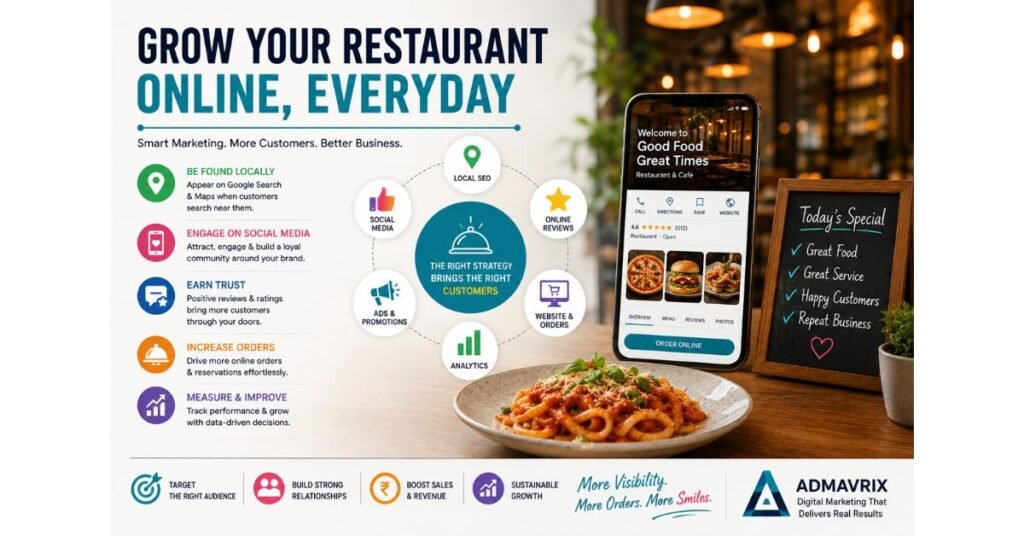
The future of restaurant marketing will focus on personalization, automation, and local search. Artificial intelligence will help restaurants recommend menu items, automate customer communication, and optimize advertising. Voice search, smart assistants, and location-based marketing will continue to shape how customers discover places to eat.
Restaurants that embrace digital transformation today will be better positioned to attract loyal customers and sustain long-term growth.
Conclusion
Digital Marketing for Restaurants is no longer optional—it is essential for success in today’s competitive food industry. A strong online presence helps restaurants attract local customers, increase reservations, improve online orders, and build lasting customer relationships.
By combining Local SEO, Google Business Profile optimization, Google Ads, Meta Ads, engaging social media content, and reputation management, restaurants can create a reliable and scalable marketing system.
Success comes from consistently delivering value, measuring results, and adapting to changing customer behaviour.
Frequently Asked Questions (FAQ)
1. What is Digital Marketing for Restaurants?
It is the use of online marketing channels such as SEO, Google Ads, social media, email marketing, and local SEO to attract customers and grow restaurant sales.
2. Which digital marketing strategy works best for restaurants?
A combination of Local SEO, Google Business Profile, Google Ads, Instagram marketing, and customer reviews generally delivers the best results.
3. Is SEO important for restaurants?
Yes. SEO helps restaurants rank higher in Google Search and Google Maps, bringing consistent organic traffic and local customers.
4. How can restaurants attract more customers online?
By optimizing their website, maintaining an active Google Business Profile, publishing engaging social media content, collecting reviews, and running targeted advertising campaigns.
5. How long does digital marketing take to show results?
Paid advertising can generate immediate visibility, while SEO and content marketing typically produce stronger long-term results over several months.
Ready to grow your restaurant business online?
Admavrix helps restaurants, cafés, cloud kitchens, and hospitality brands increase reservations, online orders, and customer loyalty through SEO, Google Ads, Meta Ads, Local SEO, content marketing, and performance-driven digital strategies.
Whether you’re launching a new restaurant or scaling an established brand, our team can build a customized marketing plan that delivers measurable business growth.