Search is undergoing one of the biggest transformations since the invention of modern search engines.
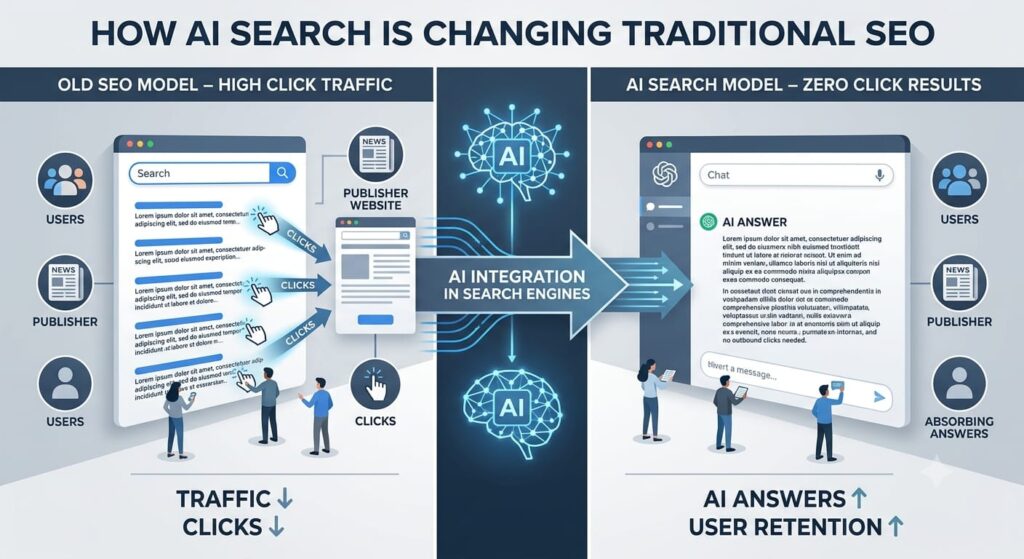
For more than two decades, the internet worked on a simple system: users searched for information, saw a list of links, and clicked through to websites. That click-based ecosystem powered publishers, bloggers, and digital businesses across the world.
But now, AI-powered search is changing this structure completely.
Instead of showing multiple links, modern search engines are increasingly generating direct answers using artificial intelligence. These answers are created by summarizing content from multiple sources across the web.
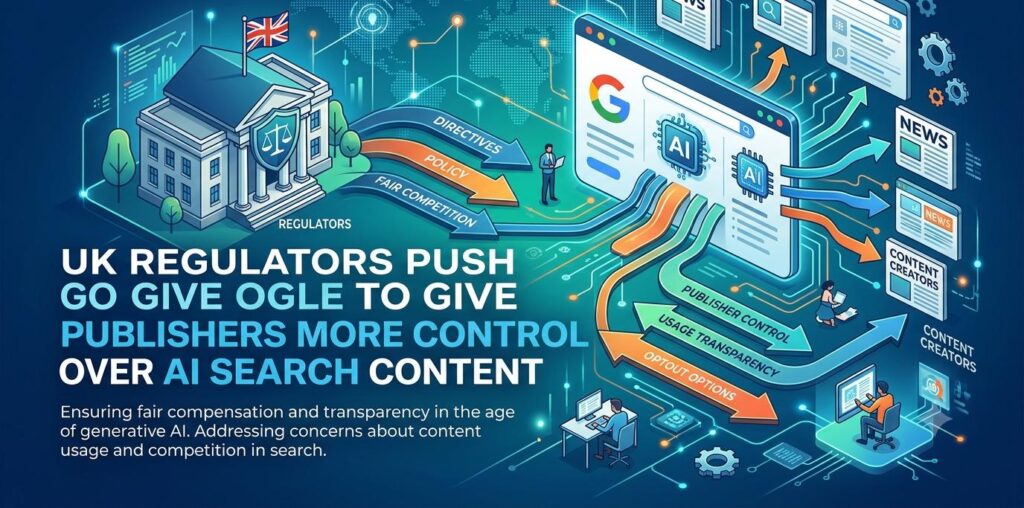
This shift has triggered serious concerns in the United Kingdom. Regulators are now pressuring Google to give publishers more control over how their content is used in AI-generated search results.
At the center of this debate is a simple question:
Who should control the value of information — the creators or the platforms that summarize it?
Why UK Regulators Are Investigating AI Search
The UK competition authority, the Competition and Markets Authority, is reviewing how AI search is affecting the digital economy.
Publishers argue that their visibility, traffic, and revenue are being reduced without proper compensation.
Key concerns include:
- Declining traffic to original websites
- Lack of transparency in AI-generated summaries
- Possible misuse of copyrighted content
- Increasing dominance of large tech platforms
The concern is not only competition — it is also the long-term survival of independent digital publishing.
How AI Search Is Changing User Behavior
AI search is removing the traditional “click journey.”
Instead of browsing multiple pages, users now receive instant answers directly on the results page.
Key behavioral shifts:
- Fewer clicks on websites
- More “zero-click” searches
- AI becomes the first and final source of answers
- Publishers lose visibility in search funnels
This fundamentally changes how attention flows on the internet.
Traditional SEO vs AI Search Model
📊 Comparison Table
| Feature | Traditional SEO Search | AI-Powered Search |
|---|---|---|
| Result Type | List of links | Direct answers |
| User Action | Click and browse websites | Read answer instantly |
| Traffic Flow | High website visits | Reduced clicks |
| Visibility | Ranking-based | AI selection-based |
| Revenue Impact | Strong ad impressions | Lower page views |
| Competition | Keywords & backlinks | Authority & trust signals |
| Role of Google | Index & rank pages | Summarize & answer |
This shift shows why publishers are increasingly concerned about long-term sustainability.
Google’s Position on AI Search
Google defends its AI search model by arguing that it improves discovery and continues to support publishers.
The company states:
- AI search improves user experience
- Source links are still included
- Publishers continue receiving billions of clicks
- AI helps users discover more relevant content
However, critics argue that even when links exist, users rarely click them because the answer is already provided directly.
What UK Regulators May Change
If regulatory action progresses, several important changes could be introduced:
1. Publisher Opt-Out Controls
Publishers may be allowed to block or allow AI usage of their content.
2. Mandatory Source Attribution
AI-generated answers may be required to clearly show where information comes from.
3. Revenue Sharing Models
Platforms may need to compensate publishers for content used in AI systems.
4. Transparency Requirements
Search engines may need to explain how AI answers are generated.
5. Fair Competition Rules
Preventing unfair prioritization of specific sources in AI summaries.
Impact on Publishers and Digital Businesses
This shift creates both challenges and opportunities.
Challenges:
- Reduced organic search traffic
- Lower advertising revenue
- Dependence on platform algorithms
- Difficulty for small publishers to compete
Opportunities:
- Strong brands gain visibility in AI answers
- Direct audience channels become more important
- Subscription models grow stronger
- High-quality content becomes more valuable
The future will reward publishers who build loyal audiences outside search engines.
SEO Strategy Is Evolving
SEO is not dead — it is transforming.
New priorities include:
- Topic authority over keyword targeting
- Structured content for AI readability
- Brand trust signals across platforms
- Inclusion in AI-generated answers
- Depth and originality of content
Table: Future SEO vs Traditional SEO
| Area | Traditional SEO | AI Search SEO |
|---|---|---|
| Focus | Keywords | Intent & topics |
| Goal | Rank #1 on Google | Be included in AI answers |
| Content Style | Optimized articles | Deep authoritative content |
| Metrics | Clicks & impressions | AI mentions & visibility |
| Strategy | Backlinks | Authority & trust |
Why This Debate Matters Globally
This is not just a UK issue — it is a global internet shift.
If AI becomes the main way users consume information, then control over AI systems means control over:
- What users see
- Which sources are highlighted
- How information is summarized
- How traffic is distributed
This is why regulators are stepping in early.
Possible Future Outcomes
The regulatory push may lead to:
- Stronger AI copyright laws
- Licensing agreements for AI training data
- Mandatory attribution in AI answers
- Revenue-sharing systems for publishers
- Increased competition in AI search platforms
Each outcome could reshape the digital ecosystem.
Conclusion
The growing pressure from UK regulators on Google marks a major turning point in how search works.
AI search is making information faster and more accessible, but it is also changing how value is distributed across the internet.
Publishers are no longer competing only for rankings — they are competing for inclusion in AI-generated answers.
The decisions made in this regulatory debate will influence the future of SEO, digital publishing, and online information systems worldwide.
One thing is certain:
The era of traditional search is fading, and AI-driven search is becoming the new standard.
If you want more insights on AI search, SEO strategy, and digital publishing trends, explore more articles on our website.
👉 Visit us for more updates: http://Admavrix.com
👉 Stay ahead in SEO, AI search, and digital marketing trends
👉 Follow us for daily updates on the future of search technology