
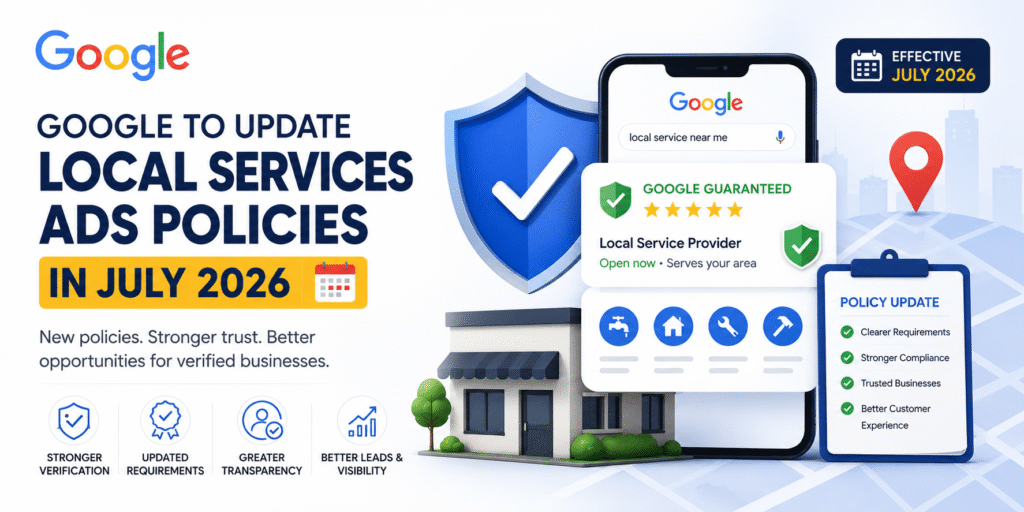
Google is introducing an important update to its Local Services Ads (LSA) policies in July 2026, signaling another step toward greater transparency, trust, and accountability in local advertising.
While the update does not drastically change how Local Services Ads function, it reinforces Google’s commitment to maintaining a high-quality ecosystem where verified and trustworthy businesses receive greater visibility.
For local service providers, marketing agencies, and business owners, understanding these changes is critical. Businesses that stay compliant and maintain accurate information will be better positioned to generate leads, build customer trust, and remain competitive in local search results.
As digital marketing continues evolving, trust signals are becoming just as important as advertising budgets. Google’s latest update reflects that shift.
What Are Local Services Ads?
Local Services Ads are a Google advertising format designed specifically for service-based businesses. Unlike traditional search ads, LSAs appear at the top of search results and connect users directly with local providers.
These ads help businesses generate qualified leads from customers actively searching for services such as:
- Plumbing
- HVAC
- Roofing
- Electrical services
- Legal services
- Real estate
- Healthcare
- Home improvement
One of the biggest advantages of LSAs is the trust factor. Verified businesses can earn Google’s trust badges, helping them stand out from competitors and attract more customers.
What Is Changing in July 2026?
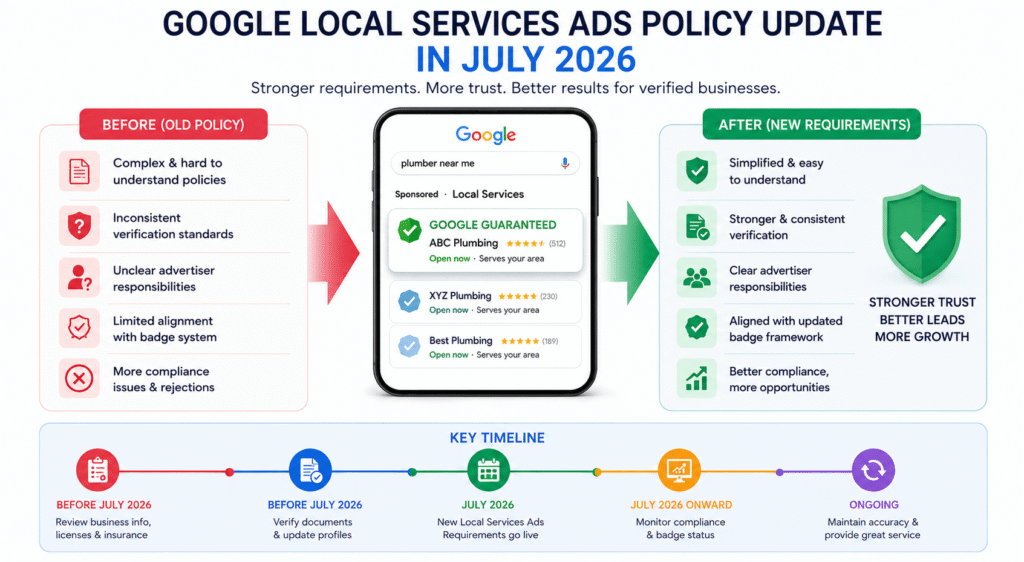
Google is updating the structure of its Local Services Ads policies by renaming the existing “Local Services Platform Policies” to “Local Services Ads Requirements.”
The update aims to:
- Simplify policy language
- Improve clarity for advertisers
- Align requirements with Google’s updated badge framework
- Better define advertiser responsibilities
- Support ongoing verification initiatives
Although the changes may appear administrative, they represent a broader strategic shift toward stronger advertiser accountability.
Google continues emphasizing verified businesses and accurate information as core components of a trustworthy local advertising ecosystem.
Why This Update Matters
Many businesses assume policy updates only affect large advertisers. However, even minor policy adjustments can influence visibility, compliance, and lead generation.
Greater Emphasis on Trust
Consumers increasingly rely on trust signals when choosing local service providers.
Verified businesses often benefit from:
- Increased credibility
- Higher click-through rates
- Better lead quality
- Stronger customer confidence
Google’s updated requirements reinforce the importance of maintaining these trust signals.
Stronger Compliance Standards
The new framework makes it easier for advertisers to understand what is required to remain eligible for Local Services Ads.
Businesses that proactively maintain compliance are less likely to experience disruptions.
Improved Customer Experience
Google’s long-term goal is to provide users with reliable service providers.
Clearer requirements help create a better experience for both businesses and consumers.
Industries Most Likely to Be Affected
While all LSA advertisers should review the update, some industries rely more heavily on verification and trust signals.
Home Services
Plumbers, electricians, contractors, HVAC specialists, and roofers generate a significant portion of their leads through Local Services Ads.
Maintaining licenses, insurance, and accurate business information will remain essential.
Legal Services
Law firms and attorneys must ensure professional credentials and business details are current and accurate.
Real Estate
Agents and brokerages should regularly review licensing information and customer reviews.
Healthcare Providers
Medical professionals and healthcare businesses often face stricter verification standards and should monitor compliance closely.
Financial Services
Trust and transparency are critical in financial industries, making verification particularly important.
Local Services Ads Update Timeline
| Date | Action |
|---|---|
| Before July 2026 | Review business information |
| Before July 2026 | Verify licenses and insurance |
| July 2026 | Updated requirements take effect |
| July 2026 Onward | Monitor compliance status |
| Ongoing | Maintain verification records |
Businesses that prepare early can avoid unnecessary disruptions.
Key Areas Businesses Should Review
Business Information
Ensure consistency across:
- Local Services Ads
- Google Business Profile
- Website
- Social media accounts
- Online directories
Accurate information supports both compliance and local SEO performance.
Licenses and Certifications
Review all documentation to confirm:
- Licenses are active
- Certifications are current
- Insurance policies remain valid
- Records match business details
Customer Reviews
Reviews continue influencing customer trust and lead generation.
Businesses should:
- Encourage feedback
- Respond professionally
- Address concerns promptly
- Maintain strong service quality
Verification Status
Regularly monitor account status and verification requirements.
Being proactive can prevent unexpected interruptions.
What Happens If Businesses Fail to Comply?
Ignoring policy updates can create significant challenges.
Potential consequences include:
Reduced Visibility
Businesses may experience lower placement opportunities within Local Services Ads.
Verification Issues
Incomplete or outdated documentation can delay verification processes.
Badge Eligibility Risks
Failure to meet requirements could impact trust badge eligibility.
Lost Leads
Reduced visibility often results in fewer qualified customer inquiries.
Damaged Trust
Consumers are more likely to engage with businesses that display strong trust signals.
The Growing Connection Between Local SEO and Local Services Ads
Local SEO and Local Services Ads are becoming increasingly interconnected.
Businesses that perform well in local search often share common characteristics:
- Accurate business information
- Strong review profiles
- Consistent citations
- Verified credentials
- Positive customer experiences
Combining Local SEO with Local Services Ads creates a stronger overall local marketing strategy.
Instead of viewing them as separate channels, businesses should treat them as complementary growth tools.
How Businesses Can Prepare for the Update
Step 1: Audit Business Information
Review all online profiles and ensure consistency.
Step 2: Verify Documentation
Update licenses, certifications, insurance records, and business information.
Step 3: Review Your Google Business Profile
Ensure all information is accurate and complete.
Step 4: Monitor Customer Feedback
Maintain a strong reputation through active review management.
Step 5: Work With Marketing Professionals
Professional guidance can help identify compliance issues before they affect performance.
Expert Analysis: Why This Update Is More Important Than It Appears
At first glance, Google’s July update may seem like a simple policy reorganization.
However, the larger message is clear.
Google is investing heavily in trust-based advertising systems. As AI-generated content, fraudulent listings, and misleading information continue to challenge digital platforms, verification is becoming a key differentiator.
Businesses that prioritize transparency, customer satisfaction, and compliance will likely benefit from increased visibility and stronger lead generation opportunities.
In many ways, Google’s Local Services Ads ecosystem is evolving from a simple advertising platform into a trust-driven marketplace.
Key Takeaways
- Google is updating Local Services Ads policies in July 2026.
- “Platform Policies” will become “Local Services Ads Requirements.”
- Verification and compliance remain critical.
- Trust signals are becoming increasingly important.
- Businesses should review licenses, insurance, and profile information.
- Local SEO and LSAs work best when combined.
- Early preparation can prevent disruptions and lead loss.
Frequently Asked Questions
Will the July 2026 update affect all businesses?
Any business using Local Services Ads should review the updated requirements to ensure continued compliance.
Are new verification requirements being introduced?
Google’s primary goal is to clarify existing requirements and align them with its updated badge framework.
Can businesses lose visibility if they fail to comply?
Potentially, yes. Verification issues and incomplete information can affect visibility and lead generation.
Does this update impact Local SEO?
Indirectly, yes. Accurate business information and trust signals support both Local Services Ads and local SEO performance.
Should agencies review client accounts?
Absolutely. Agencies should audit client profiles and documentation before the update takes effect.
Final Thoughts
Google’s July 2026 Local Services Ads policy update reinforces a growing trend in digital marketing: trust matters more than ever.
Businesses that maintain accurate information, stay compliant, and prioritize customer satisfaction will be best positioned to succeed as Google’s advertising ecosystem continues evolving.
Rather than viewing compliance as a requirement, forward-thinking businesses should view it as a competitive advantage that strengthens visibility, credibility, and long-term growth.
Need Help Navigating Google’s Latest Advertising Updates?
At Admavrix, we help businesses stay ahead of industry changes through SEO, Local SEO, Google Ads management, content marketing, and performance-driven digital strategies.
Whether you’re looking to improve Local Services Ads performance, strengthen local search visibility, or generate more qualified leads, our experts can help you build a sustainable growth strategy.
Visit Admavrix.com to discover how we can help your business adapt, compete, and grow in an increasingly competitive digital landscape.
