Running Google Ads is easy. Running profitable Google Ads campaigns is where the real challenge begins.
Many businesses spend thousands on ads but struggle with low conversions, high cost-per-click (CPC), and disappointing returns. The problem often isn’t the budget—it’s the strategy.
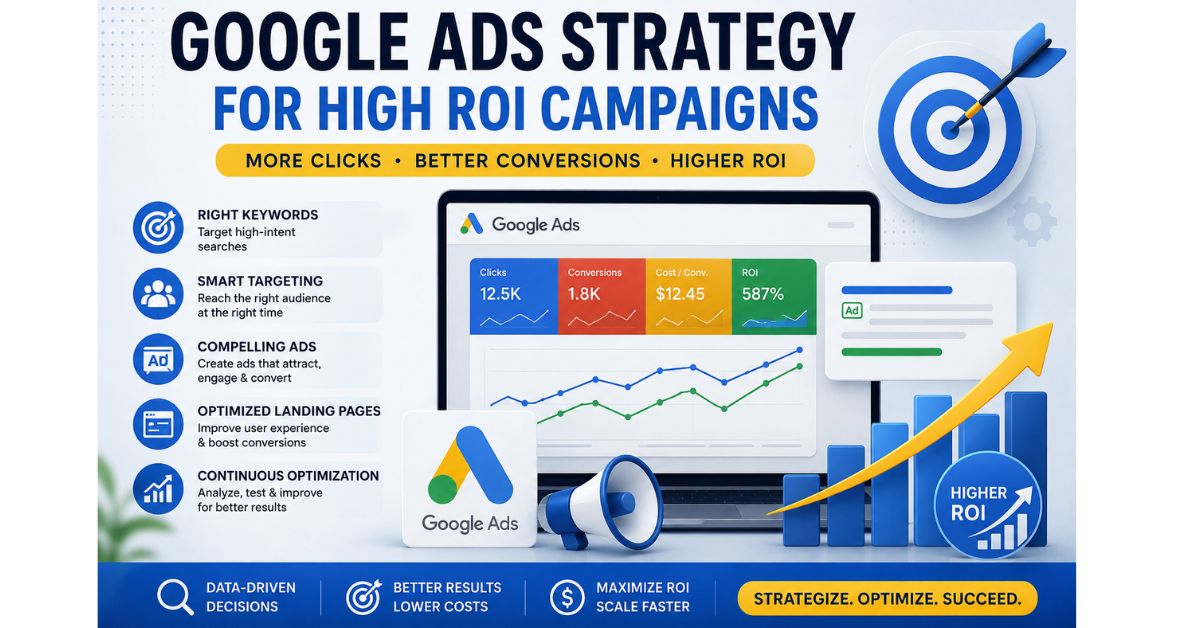
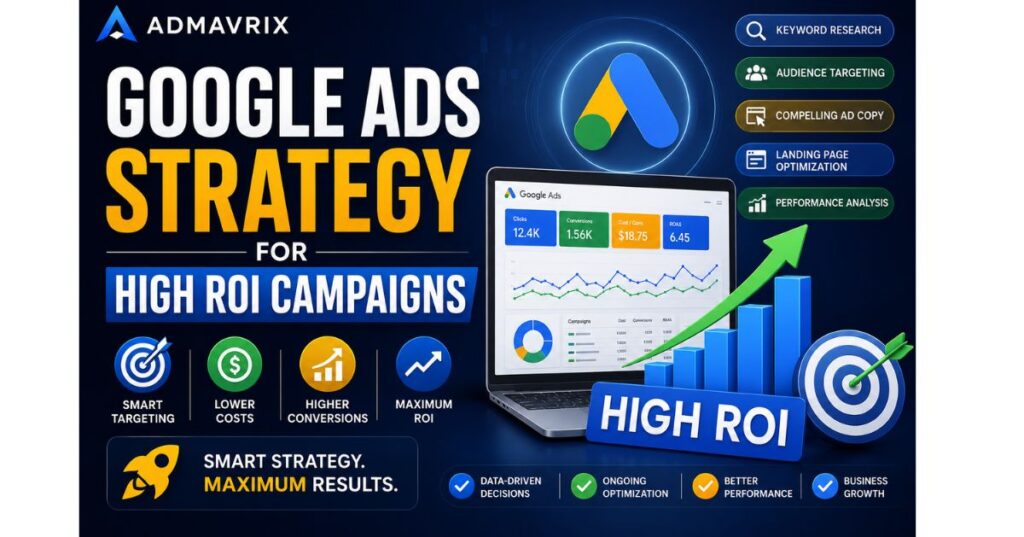
A high-ROI Google Ads campaign requires smart audience targeting, optimized keywords, compelling ad copy, landing page optimization, and continuous performance analysis.
The difference between average campaigns and high-performing campaigns lies in strategic execution.
Google Ads remains one of the most powerful platforms for driving measurable ROI. Yet, many brands struggle to unlock their full potential. The secret lies in strategic targeting, creative optimization, and data‑driven execution. This blog reveals how to craft campaigns that consistently deliver high returns.
Introduction
Google Ads has become one of the most effective digital marketing channels for businesses seeking measurable growth. It enables brands to connect with potential customers precisely when they are actively searching for products or services.
Whether you’re a startup, local business, e-commerce brand, or enterprise company, Google Ads can help generate:
- Qualified traffic
- Higher conversions
- Brand awareness
- Leads and sales
- Better ROI
However, many advertisers make critical mistakes by focusing only on clicks instead of overall business outcomes.
A strategic approach ensures your campaigns generate meaningful returns rather than simply increasing spending.
Meaning — What is Google Ads & Strategy?
Google Ads is Google’s advertising platform that allows businesses to display ads across search, display, YouTube, and app networks. It operates on a pay‑per‑click (PPC) model, meaning advertisers pay only when users engage.
A Google Ads strategy is a structured plan used to create, manage, optimize, and improve paid advertising campaigns on Google platforms.
The strategy includes:
- Keyword research
- Audience targeting
- Budget planning
- Ad creation
- Bid management
- Conversion tracking
- Landing page optimization
- Performance analysis
A successful strategy focuses on achieving the highest possible return on investment (ROI) while reducing wasted ad spend.
Key Points
Focus on conversion-focused keywords
Improve landing page experience
Target the right audience
Monitor campaign performance regularly
Use data-driven optimization
Test ad variations continuously
Track ROI beyond clicks
Visual Introduction
Traditional Advertising | Google Ads Marketing |
Broad audience targeting | Intent-based targeting |
Difficult performance tracking | Real-time analytics |
Limited optimization | Continuous optimization |
High uncertainty | Measurable ROI |
Delayed results | Faster visibility |
Features of Google Ads
1. Keyword Targeting
Reach users actively searching for products and services.
2. Audience Segmentation
Target users based on interests, demographics, and behavior.
3. Multiple Ad Formats
Google Ads supports:
4. Performance Analytics
Track campaign metrics in real time.
5. Automated Bidding
AI-powered bidding strategies improve campaign efficiency.
- Search ads
- Display ads
- Shopping ads
- Video ads
- App ads
Benefits of High ROI Google Ads Campaigns
Increased Lead Generation
Reach customers actively searching for solutions.
Better Conversion Rates
Intent-based targeting often drives qualified traffic.
Faster Business Growth
Generate results quicker than many organic methods.
Measurable Results
Monitor spending and campaign performance accurately.
Improved Brand Visibility
Appear at the top of search results.
Better Marketing Efficiency
Reduce wasted advertising costs.
Small Case Study
Local Fitness Center Campaign Optimization
A fitness center launched Google Ads campaigns targeting broad keywords like:
“gym membership”
Results after 30 days:
- High ad spend
- Low conversion rate
- Poor lead quality
Changes Implemented:
- Targeted location-specific keywords
- Improved landing page design
- Added negative keywords
- Optimized ad copy
Results:
- Increased conversion rate
- Lower cost per acquisition
- Higher ROI
Lesson: Targeting quality traffic matters more than simply increasing traffic volume.
Google Ads Strategies for High ROI Campaigns
1. Focus on High-Intent Keywords
High-intent keywords target users who are closer to making decisions.
Examples:
Poor keyword:
“digital marketing”
Better keyword:
“best digital marketing agency near me”
Benefits:
- Better conversion potential
- Lower wasted clicks
- Higher ROI
2. Use Negative Keywords
Negative keywords prevent ads from showing for irrelevant searches.
Examples:
If selling premium software:
Add negatives such as:
- free
- tutorial
- jobs
- download
Benefits:
- Better traffic quality
- Lower costs
- Higher conversion rates
3. Improve Landing Page Experience
Many campaigns fail because landing pages don’t match user expectations.
Optimize:
- Page speed
- Mobile responsiveness
- Headlines
- CTA buttons
- Form simplicity
Good landing pages improve:
- Quality Score
- User experience
- Conversion rates
4. Segment Audiences Properly
Avoid targeting everyone.
Use:
- Geographic targeting
- Demographics
- Device targeting
- User behavior
- Customer interests
Audience segmentation improves campaign efficiency.
5. Create Compelling Ad Copy
Effective ads should include:
- Attention-grabbing headlines
- Clear value proposition
- Emotional triggers
- Strong call-to-action
“Increase Leads by 40% with Expert Digital Marketing Solutions.”
6. Monitor Quality Score
Google evaluates:
- Keyword relevance
- Landing page quality
- Ad relevance
- Expected CTR
A higher Quality Score often reduces advertising costs.
7. A/B Test Campaign Elements
Continuously test:
- Headlines
- Images
- CTA buttons
- Landing pages
- Ad descriptions
Small changes can create significant ROI improvements.
Real Example / Case Study
E-commerce Store Campaign Success
An online fashion retailer struggled with high advertising costs.
Problems:
- Broad audience targeting
- Weak ad copy
- Generic landing pages
Optimization Actions:
- Introduced audience segmentation
- Added dynamic ads
- Improved product pages
- Used remarketing campaigns
Results:
- Lower acquisition costs
- Increased sales conversions
- Improved ROI significantly
Google Ads Trends
1. AI-Powered Bidding
Machine learning improves bid optimization.
2. Performance Max Campaigns
Automated campaign management continues growing.
3. First-Party Data Strategies
Businesses increasingly use owned customer data.
4. Video Advertising Growth
Short-form video campaigns continue expanding.
5. Personalization
Customized ad experiences improve engagement.
Expert Quotes
“Good advertising makes products visible. Great advertising makes products valuable.” — Marketing Insight
“Successful Google Ads campaigns rely on data, testing, and customer understanding.” — Digital Advertising Expert
Future Outlook
Google Ads will continue evolving through:
- AI automation
- Predictive analytics
- Better personalization
- Voice search optimization
- Privacy-focused targeting
- Smarter campaign automation
Businesses that combine data analysis with creative marketing strategies will achieve stronger long-term advertising performance.
Conclusion
Google Ads remains one of the most powerful digital marketing tools for businesses looking to generate leads, sales, and measurable growth.
Success does not come from spending more—it comes from understanding customer behavior, improving targeting, optimizing campaigns, and continuously learning from data.
Businesses that prioritize strategy over spending will build stronger campaigns and achieve sustainable long-term ROI.
Contact Admavrix Today at www.admavrix.com to design Google Ads campaigns that deliver measurable ROI.