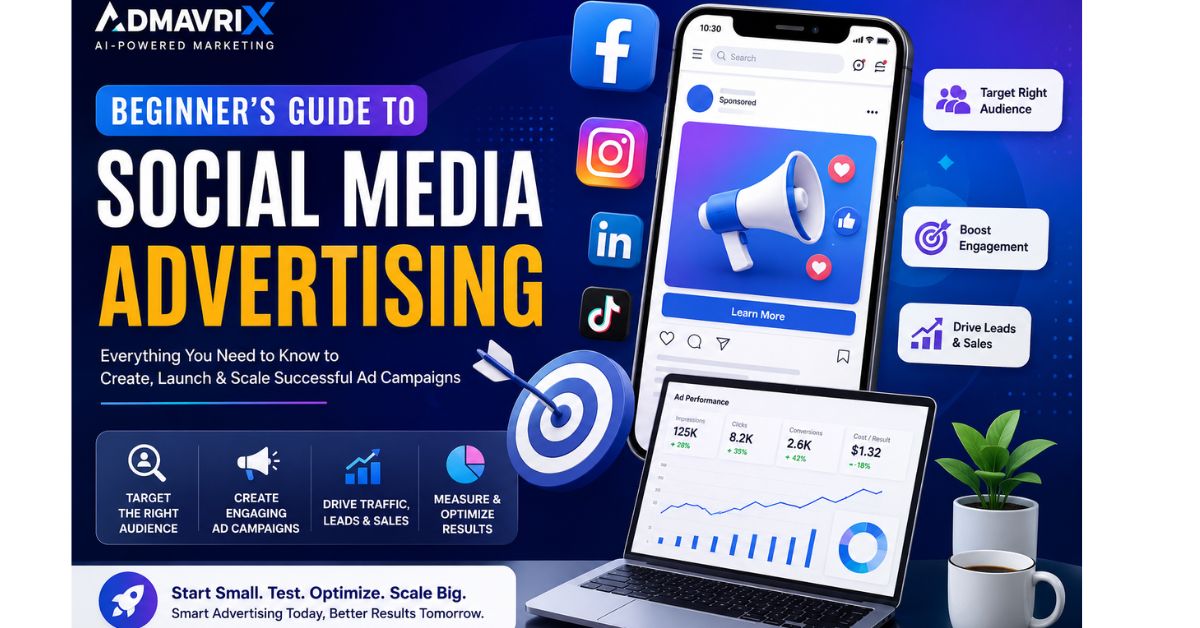
Social media has transformed the way businesses market their products and services. Today, platforms like Facebook, Instagram, LinkedIn, TikTok, and YouTube are not just social networking sites — they are powerful advertising platforms capable of generating leads, increasing brand awareness, and driving massive sales growth.
For beginners, social media advertising may seem complicated at first. However, with the right strategy and understanding, businesses of all sizes can launch successful campaigns even with small budgets.
This beginner’s guide explains everything you need to know about social media advertising, including platforms, strategies, benefits, trends, common mistakes, and expert tips to help you create high-performing campaigns in 2026.
Meaning of Social Media Advertising
Social media advertising is a digital marketing method where businesses use paid advertisements on social media platforms to promote products, services, or brands to targeted audiences.
These ads can appear in:
- News feeds
- Stories
- Reels
- Video content
- Search sections
- Messaging platforms
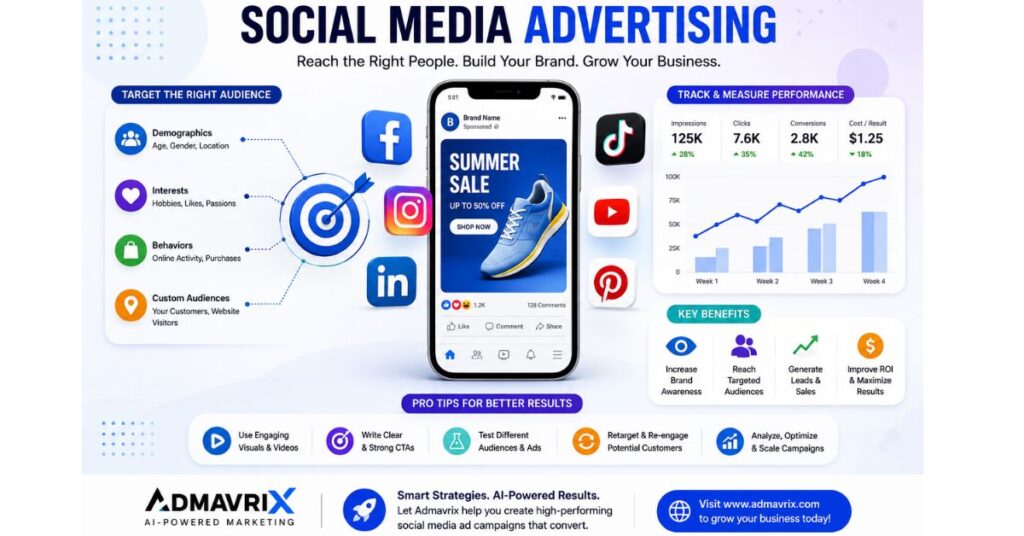
Unlike traditional advertising, social media advertising allows precise audience targeting based on:
- Interests
- Demographics
- Behavior
- Location
- Device usage
- Purchase intent
Key Points
- Helps businesses reach targeted audiences quickly
- Improves brand visibility and engagement
- Generates leads and website traffic
- Supports e-commerce and online sales
- Offers measurable campaign analytics
- Suitable for startups and enterprises
- AI tools improve ad performance optimization
Features of Social Media Advertising
1. Advanced Audience Targeting
Advertisers can target users based on:
- Age
- Gender
- Interests
- Online activity
- Profession
- Purchase behavior
- Geographic location
2. Multiple Ad Formats
Popular ad formats include:
- Image Ads
- Video Ads
- Carousel Ads
- Story Ads
- Reels Ads
- Lead Generation Ads
3. Real-Time Analytics
Businesses can monitor:
- Reach
- Impressions
- Clicks
- Engagement
- Conversions
- Return on Ad Spend (ROAS)
4. Flexible Budget Options
Social media advertising works for every budget:
- Daily budgets
- Lifetime budgets
- Automatic bidding
- Manual bidding
5. AI-Powered Optimization
Modern advertising platforms use artificial intelligence to:
- Improve targeting
- Optimize ad delivery
- Increase conversions
- Reduce advertising costs
Benefits of Social Media Advertising
| Benefit | Description |
| Better Brand Awareness | Reach thousands of users quickly |
| Targeted Marketing | Connect with ideal customers |
| Increased Engagement | Boost likes, shares, and comments |
| More Website Traffic | Drive quality visitors |
| Higher Conversions | Generate sales and leads |
| Budget-Friendly | Start with low investment |
| Performance Tracking | Start with a low investment |
Small Case Study
Startup Clothing Brand Success
A small fashion brand launched Instagram and Facebook advertising campaigns targeting users interested in online shopping and fashion trends.
Campaign Results:
- 250% increase in website traffic
- 3.5X higher engagement
- 45% growth in online sales
- Reduced cost per lead by 30%
This demonstrates how beginner-friendly social media advertising can deliver impressive business growth.
Explanation of Social Media Advertising
Step 1: Define Your Advertising Goals
Every successful campaign starts with a clear objective.
Common Goals:
- Brand Awareness
- Website Traffic
- Lead Generation
- App Installs
- Video Views
- E-commerce Sales
Clear goals help platforms optimize ad delivery effectively.
Step 2: Choose the Right Platform
Facebook Advertising
Best for:
- Local businesses
- E-commerce stores
- Service-based businesses
Instagram Advertising
Best for:
- Fashion brands
- Food businesses
- Lifestyle brands
LinkedIn Advertising
Best for:
- Corporate marketing
- B2B lead generation
- Professional networking
TikTok Advertising
Best for:
- Young audiences
- Viral campaigns
- Creative storytelling
YouTube Advertising
Best for:
- Product demonstrations
- Tutorials
- Brand storytelling
Step 3: Understand Your Audience
Audience research is one of the most important steps.
Analyze:
- Customer interests
- Pain points
- Online behavior
- Buying intent
- Device usage
Better audience understanding improves campaign performance significantly.
Step 4: Create Engaging Ad Creatives
Effective advertisements should include:
- Strong headline
- High-quality visuals
- Clear call-to-action
- Emotional appeal
- Problem-solving message
Video advertisements generally perform better than static image ads.
Step 5: Launch and Optimize Campaigns
Track important metrics like:
- CTR (Click Through Rate)
- CPC (Cost Per Click)
- CPM (Cost Per 1000 Impressions)
- Conversion Rate
- ROAS (Return on Ad Spend)
Optimization is necessary for scaling successful campaigns.
Real Example / Case Study
E-commerce Beauty Brand Using Meta Ads
An online skincare brand invested ₹30,000 in Meta advertising campaigns.
Strategy:
- Instagram Reels Ads
- Retargeting campaigns
- Influencer-style creatives
- AI audience optimization
Results:
- 5X Return on Ad Spend
- 1500+ new leads
- 70% increase in repeat purchases
- Higher brand engagement
This highlights the effectiveness of strategic social media advertising.
Latest Trends in Social Media Advertising (2026)
AI-Driven Advertising
AI tools optimize targeting and bidding automatically.
Short-Form Video Ads
Reels and TikTok videos dominate user engagement.
Influencer Advertising
Brands collaborate with creators for authentic promotion.
Personalized Advertising
Customized ads improve conversions and user experience.
Conversational Marketing
Chat-based advertising is rapidly growing.
Common Mistakes Beginners Make
Targeting Everyone
Broad targeting increases ad spend waste.
Ignoring Mobile Optimization
Most social media traffic comes from smartphones.
Weak Call-to-Action
Users need clear instructions to take action.
Not Testing Ads
A/B testing helps improve results.
Low-Quality Visuals
Poor creatives reduce trust and engagement.
Pro Tips for Better Social Media Advertising
- Use video-based content
- Focus on audience intent
- Test multiple creatives
- Retarget website visitors
- Optimize landing pages
- Monitor analytics regularly
- Use AI optimization features
Conclusion
Social media advertising has become one of the most powerful tools in modern digital marketing. Businesses now have the ability to reach highly targeted audiences, generate leads, and increase revenue faster than ever before.
For beginners, success depends on understanding audience behavior, choosing the right platforms, creating engaging content, and continuously optimizing campaigns.
As AI, automation, and personalization continue evolving, social media advertising will become even more advanced and results-driven in the coming years.
Businesses that adopt innovative advertising strategies early will gain a strong competitive advantage in the digital marketplace.
Ready to grow your business with powerful social media advertising strategies?
Contact Admavrix today to create AI-powered campaigns that increase engagement, generate high-quality leads, and boost business growth.
Visit www.admavrix.com to get started.