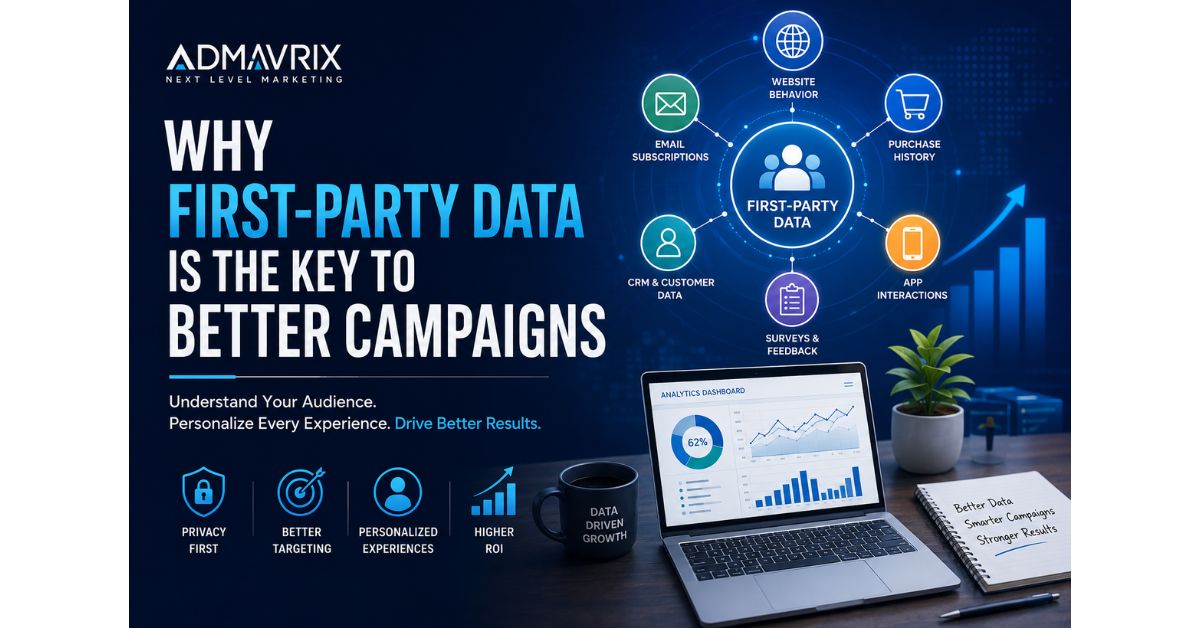
hat happens when third-party cookies disappear and marketers lose access to audience tracking?
The answer is simple: brands that own their customer data will win.
In today’s privacy-first digital world, first-party data has become the backbone of smarter targeting, higher conversions, and stronger customer relationships. Businesses that fail to build a first-party data strategy risk falling behind competitors who understand their audience better.
Introduction
Marketing is evolving faster than ever before. With increasing privacy regulations, browser restrictions, and changing consumer expectations, businesses can no longer rely heavily on third-party cookies for advertising success.
This shift has created a massive opportunity for brands to focus on first-party data — information collected directly from customers through websites, apps, emails, CRM systems, surveys, and purchase history.
Unlike third-party data, first-party data is accurate, reliable, privacy-friendly, and highly valuable for creating personalized marketing campaigns.
In this blog, we’ll explore why first-party data matters, how marketers can use it effectively, common mistakes to avoid, future trends, and practical strategies to improve campaign performance.
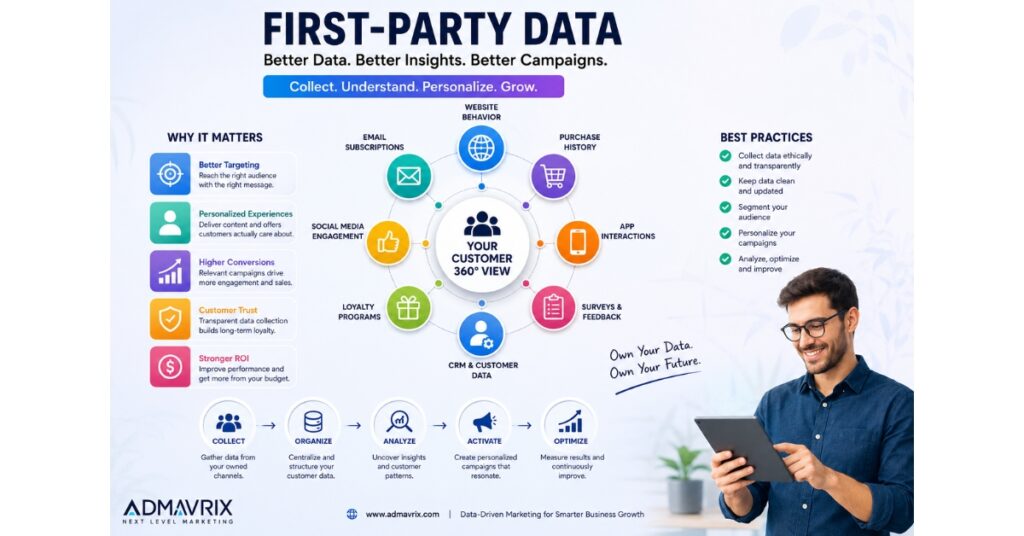
What is First-Party Data?
First-party data refers to customer information collected directly by a business through its own channels.
This includes:
- Website activity
- Purchase history
- Email subscriptions
- Customer feedback
- App interactions
- Social media engagement
- CRM data
- Survey responses
Because the business owns this data, it is more trustworthy and compliant with modern privacy standards.
Why First-Party Data Matters
Improves targeting accuracy
Builds customer trust
Supports personalized experiences`
Reduces dependence on third-party cookies
Increases ROI on ad campaigns
Enhances customer retention
Helps businesses make data-driven decisions
Features of First-Party Data
Feature | Benefit |
Collected directly from customers | Higher accuracy |
Privacy-friendly | Better compliance |
Real-time insights | Faster decisions |
Personalized targeting | Higher engagement |
Cost-effective | Better ROI |
Owned by brand | Long-term marketing asset |
Benefits of Using First-Party Data
1. Better Personalization
Customers expect brands to understand their preferences. First-party data allows marketers to deliver tailored recommendations, offers, and content.
Example:
An eCommerce store can recommend products based on previous purchases.
2. Higher Conversion Rates
When campaigns target the right audience with relevant messaging, conversion rates naturally improve.
3. Improved Customer Trust
Consumers are becoming more conscious about data privacy. Using transparent data collection builds trust and credibility.
4. Stronger Retargeting Campaigns
Brands can create highly effective retargeting ads using website visits, abandoned carts, and customer interactions.
5. Long-Term Competitive Advantage
Businesses with strong customer data strategies gain valuable insights competitors may not have.
Small Case Study
Fashion Brand Success Story
A fashion eCommerce brand shifted from third-party audience targeting to first-party email and customer behavior tracking.
Results:
- 38% increase in email open rates
- 27% increase in repeat purchases
- 42% improvement in ad ROI
The brand achieved this by:
- Collecting customer preferences
- Creating personalized offers
- Using CRM segmentation
- Tracking customer journeys
Real Example / Case Study
Starbucks Rewards Program
One of the best real-world examples of first-party data marketing is the Starbucks rewards ecosystem.
Starbucks collects:
- Purchase behavior
- Favorite products
- Visit frequency
- Mobile app engagement
- Location data
Using this information, Starbucks delivers:
- Personalized offers
- Loyalty rewards
- Seasonal recommendations
- Targeted push notifications
This strategy significantly improves customer retention and engagement.
Top First-Party Data Trends
1. AI-Powered Personalization
AI tools will use customer data to create hyper-personalized experiences.
2. Privacy-First Marketing
Brands focusing on transparency will gain customer trust.
3. Zero-Party Data Growth
Customers will voluntarily share preferences through quizzes and surveys.
4. Cookieless Advertising
Businesses will rely more on owned customer data ecosystems.
5. Predictive Analytics
Brands will forecast customer behavior using historical data patterns.
Common Mistakes Marketers Make
Avoid These Errors
- Collecting too much unnecessary data
- Ignoring data privacy compliance
- Not segmenting audiences
- Poor CRM organization
- Failing to personalize campaigns
- Using outdated customer information
- Not integrating marketing tools
Pro Tips for Better Campaigns
Expert Strategies
Use CRM Integration
Connect website, email, ads, and analytics into one system.
Build Email Lists Organically
Offer lead magnets, newsletters, and valuable content.
Create Customer Segments
Group users by behavior, interests, and purchase history.
Focus on Data Quality
Clean and update customer records regularly.
Use Marketing Automation
Automate personalized email sequences and retargeting.
Expert Quotes
“Data is the new oil, but first-party data is the refined fuel powering modern marketing.” — Digital Marketing Expert
“Brands that prioritize customer trust will outperform competitors in the privacy-first era.” — Marketing Strategist
Step-by-Step Guide to Building a First-Party Data Strategy
Step 1: Audit Current Data Sources
Identify where customer data currently comes from.
Step 2: Create Lead Collection Systems
Use forms, newsletters, and gated content.
Step 3: Integrate CRM Platforms
Centralize customer information.
Step 4: Segment Audiences
Create targeted customer groups.
Step 5: Personalize Campaigns
Deliver relevant messages and offers.
Step 6: Analyze Performance
Track conversions, engagement, and ROI.
Step 7: Optimize Continuously
Improve campaigns using customer insights.
Conclusion
The future of digital marketing belongs to brands that truly understand their audience.
First-party data is no longer optional — it is the foundation of smarter campaigns, stronger customer relationships, and sustainable business growth.
As privacy regulations evolve and third-party tracking declines, marketers who invest in first-party data strategies today will gain a major competitive advantage tomorrow.
The brands that collect, understand, and responsibly use customer insights will lead the next era of marketing success.
FAQ Section
is first-party data in marketing?
First-party data is customer information collected directly through a company’s own platforms like websites, apps, emails, and CRM systems.
Why is first-party data important?
It helps marketers create personalized campaigns, improve targeting, increase ROI, and comply with privacy regulations.
How is first-party data different from third-party data?
First-party data comes directly from customers, while third-party data is collected from external sources.
Is first-party data privacy-friendly?
Yes. Since customers directly interact with the business, it is generally more transparent and privacy-compliant.
What tools help collect first-party data?
Popular tools include:
- Google Analytics
- HubSpot
- Salesforce
- Mailchimp
- CRM platforms
- Website forms
Future Outlook
The future of marketing will revolve around:
- AI-driven personalization
- Privacy-focused strategies
- Customer-owned experiences
- Real-time analytics
- Predictive customer behavior modeling
Businesses that start building strong first-party data systems today will dominate tomorrow’s digital landscape.
Contact Admavrix Today to build your first‑party data strategy and future‑proof your campaigns.
Visit www.admavrix.com to design privacy‑compliant, data‑driven marketing campaigns that deliver measurable ROI and stronger customer relationships.