What if your business could generate traffic instantly and build long-term online authority at the same time?
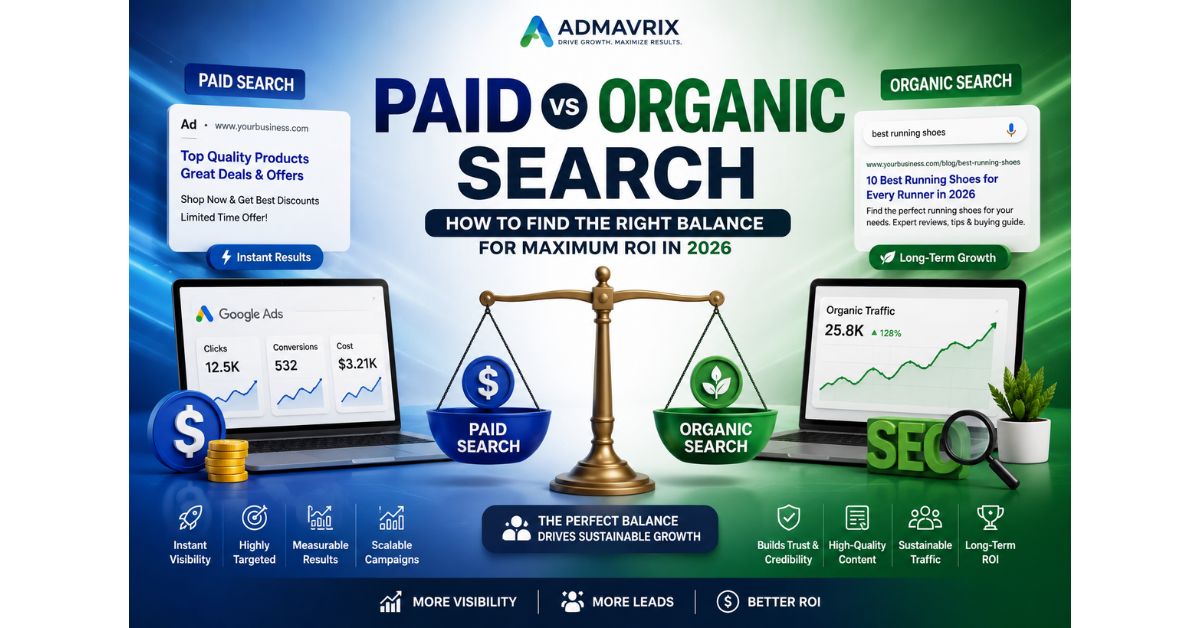
Many brands waste thousands on ads while ignoring SEO, while others rely only on organic traffic and struggle to scale quickly. The real success formula in 2026 is not choosing one over the other — it’s finding the perfect balance between Paid Search and Organic Search.
Balancing paid search (PPC) and organic search (SEO) is one of the most critical decisions for modern marketers. While PPC delivers instant visibility, SEO builds long-term authority. The right mix can maximize ROI, reduce costs, and strengthen brand presence.
Introduction
In today’s competitive digital landscape, businesses need visibility on search engines like Google to survive and grow. Two major strategies dominate search engine marketing:
- Paid Search (PPC Advertising)
- Organic Search (SEO)
Both methods help businesses attract traffic, leads, and sales — but they work differently.
Understanding when to use paid ads, when to focus on SEO, and how to combine both can dramatically improve your ROI, brand awareness, and lead generation.
This guide explains everything you need to know about balancing Paid vs Organic Search in 2026.
Meaning of Paid vs Organic Search
What is Paid Search?
Paid Search refers to advertisements displayed on search engines through platforms like Google Ads. Businesses pay whenever users click their ads.
Examples:
- Google Search Ads
- Shopping Ads
- Display Ads
- YouTube Ads
Key Goal:
Generate immediate traffic and conversions.
What is Organic Search?
Organic Search refers to unpaid traffic earned through SEO strategies like:
- Content marketing
- Keyword optimization
- Technical SEO
- Backlink building
- User experience improvements
Key Goal:
Build sustainable long-term traffic and authority.
Key Points
- Paid Search gives quick results.
- Organic SEO builds long-term trust.
- PPC works best for immediate conversions.
- SEO offers better long-term ROI.
- Combining both strategies improves overall visibility.
- Businesses using integrated search strategies often outperform competitors.
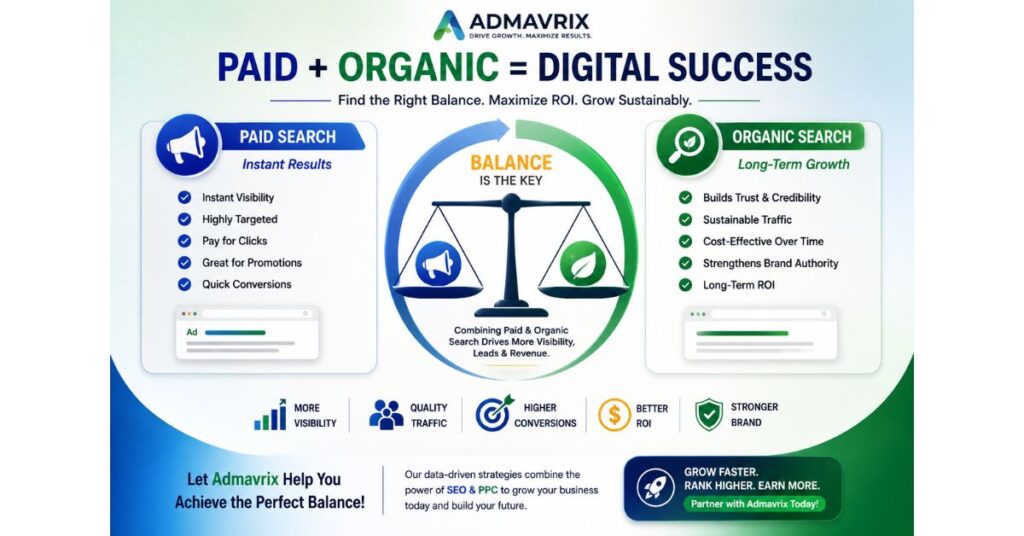
Quick Insights Table
Paid Search | Organic Search |
Instant Traffic | Long-Term Growth |
Requires Budget | Requires Time |
High Conversion Potential | High Trust Factor |
Short-Term Results | Sustainable Results |
Great for Launches | Great for Brand Authority |
Features of Paid Search
1. Instant Visibility
Ads appear at the top of Google immediately.
2. Audience Targeting
Target users based on:
- Location
- Interests
- Search intent
- Device
- Demographics
3. Measurable Results
Track:
- Clicks
- Conversions
- ROI
- Cost-per-click
4. Scalable Campaigns
Increase the budget to scale results quickly.
Features of Organic Search
1. Sustainable Traffic
SEO continues generating traffic over time.
2. Brand Credibility
Users trust organic rankings more than ads.
3. Higher Long-Term ROI
Good SEO content can drive traffic for years.
4. Better Customer Education
Blogs and guides help nurture audiences naturally.
Benefits of Combining Paid and Organic Search
Faster + Sustainable Growth
Paid ads bring quick traffic while SEO builds future growth.
Better Keyword Insights
PPC data helps identify high-converting keywords for SEO.
Increased SERP Visibility
Appearing in both ads and organic results improves click-through rates.
Improved Brand Trust
Users see your business multiple times on Google.
Reduced Marketing Risk
If ad performance drops, organic traffic still supports growth.
Small Case Study
Local Fitness Brand Growth Strategy
A fitness startup invested:
- ₹40,000/month in Google Ads
- SEO blogs targeting fitness keywords
Results After 6 Months:
- 220% increase in website traffic
- 45% reduction in paid ad dependency
- Organic traffic became their top lead source
Key Learning:
Paid ads generated initial customers while SEO reduced customer acquisition costs over time.
When to Use Paid Search
Use Paid Search When:
Launching a New Product
Ads provide instant exposure.
Running Seasonal Campaigns
Perfect for:
- Sales
- Festivals
- Limited-time offers
Competing in Highly Competitive Markets
PPC helps smaller businesses gain visibility quickly.
Retargeting Visitors
Bring back users who have already visited your website.
When to Use Organic Search
Use Organic SEO When:
Building Brand Authority
High-quality content improves trust.
Targeting Informational Searches
Blogs help attract users researching solutions.
Reducing Marketing Costs
SEO traffic becomes cost-effective over time.
Creating Evergreen Growth
Strong rankings can last for years.
Real Example / Case Study
E-commerce Brand Strategy
An online fashion store used:
- Google Ads for product launches
- SEO blogs for style guides and fashion trends
Outcomes:
- Paid campaigns boosted immediate sales
- Organic blogs ranked for thousands of keywords
- Brand search volume increased significantly
Final Result:
Their combined search strategy generated consistent revenue growth.
Search Marketing Trends in 2026
1. AI-Powered Search Optimization
Search engines increasingly prioritize AI-generated intent signals.
2. Voice Search SEO
Conversational keywords are growing rapidly.
3. First-Party Data Targeting
Businesses rely more on owned customer data.
4. Video Search Optimization
Video content now ranks heavily in search results.
5. Search Experience Optimization (SXO)
User experience and SEO are merging.
Common Mistakes Businesses Make
Depending Only on Ads
Traffic stops when the budget stops.
Ignoring SEO Content
Lack of content reduces organic reach.
Poor Keyword Research
Wrong keywords waste ad spend.
Not Tracking ROI
Without analytics, optimization becomes impossible.
Weak Landing Pages
Even great ads fail with poor user experience.
Pro Tips from SEO Experts
Combine PPC + SEO Data
Use paid keyword data to improve organic strategy.
Focus on Search Intent
Understand what users actually want.
Invest in High-Quality Content
Helpful content ranks better and converts more.
Optimize for Mobile Users
Mobile-first experiences dominate search traffic.
Monitor Competitors Regularly
Track both their ads and SEO rankings.
Step-by-Step Guide to Balance Paid and Organic Search
Step 1: Define Business Goals
Choose whether you need:
- Immediate sales
- Long-term growth
- Brand awareness
Step 2: Start with PPC
Generate fast traffic and collect keyword data.
Step 3: Build SEO Content
Create blogs targeting high-performing keywords.
Step 4: Optimize Landing Pages
Improve conversions for both SEO and PPC traffic.
Step 5: Track Analytics
Measure:
- CTR
- Bounce rate
- Conversion rate
- ROI
Step 6: Adjust Budget Allocation
Gradually shift more investment toward high-performing channels.
Expert Quotes
“SEO is a marathon, PPC is a sprint. The smartest brands master both.”
“Businesses that combine organic and paid search create stronger digital dominance.”
“Your marketing strategy should not choose between SEO and PPC — it should integrate them.”
Future Outlook
The future of digital marketing belongs to businesses that create integrated search strategies.
In 2026 and beyond:
- AI-driven search will dominate rankings
- User experience will become more important
- Brands combining SEO, PPC, content, and data analytics will outperform competitors
Businesses focusing only on one strategy may struggle to compete in the evolving search landscape.
Conclusion
Choosing between Paid Search and Organic Search is no longer the right question.
The real question is:
How effectively can your business combine both strategies?
Paid advertising helps you gain quick visibility and conversions, while SEO creates sustainable long-term growth and trust.
Businesses that balance both intelligently will dominate search results, reduce customer acquisition costs, and achieve stronger digital growth in 2026.
At Admavrix, we help businesses create powerful digital marketing strategies that combine:
- SEO
- PPC Advertising
- Content Marketing
- Social Media Marketing
- Performance Optimization
Our team focuses on measurable growth, higher ROI, and long-term brand success.
At admavrix.com to design a balanced search strategy that maximizes ROI and strengthens your digital presence.