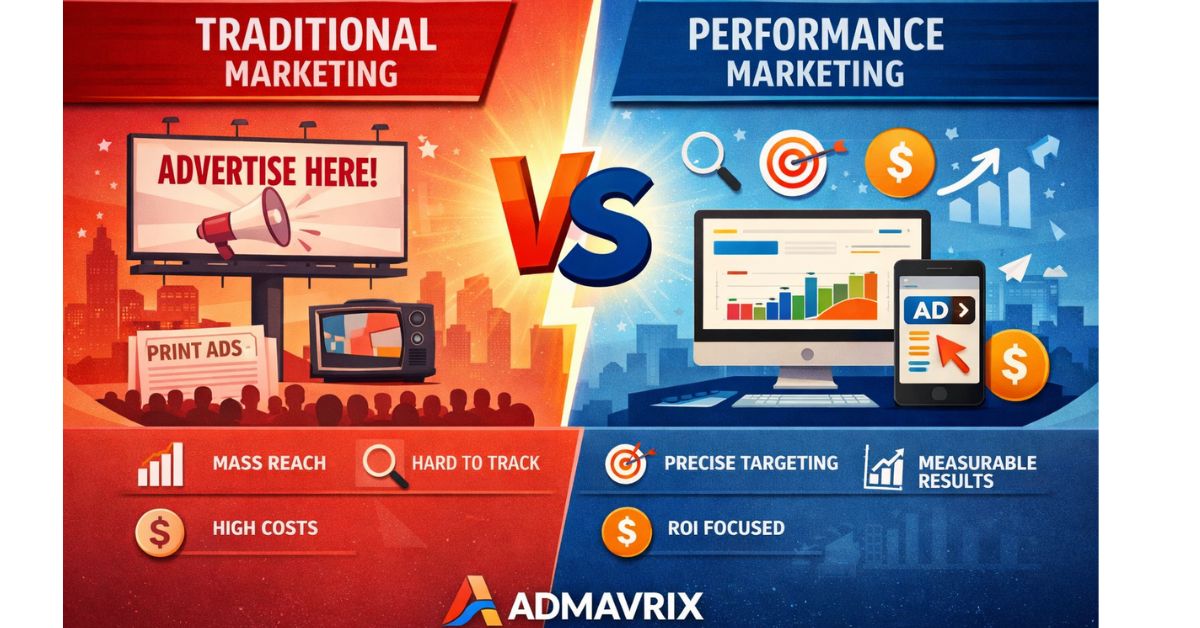
Marketing has evolved dramatically over the years. While traditional marketing relies on broad campaigns like TV ads, billboards, and print media, performance marketing focuses on measurable, ROI-driven strategies across digital platforms. Businesses today face a critical choice: stick with tried-and-true methods or embrace data-driven campaigns that deliver trackable results.
Key Differences
| Aspect | Traditional Marketing | Performance Marketing |
| Reach | Mass audience (TV, radio, print) | Targeted audience (social, search, display) |
| Measurement | Difficult to track impact | Real-time analytics & KPIs |
| Cost | High upfront investment | Flexible, pay-for-performance |
| Speed | Slow feedback loop | Instant optimization |
| ROI | Hard to calculate | Transparent & measurable |
Traditional marketing builds brand awareness and credibility but often lacks precision. Performance marketing, on the other hand, thrives on data, targeting, and measurable outcomes. With tools like Google Ads, Meta Ads, and programmatic platforms, businesses can track conversions, adjust campaigns instantly, and pay only for results.
This makes performance marketing ideal for startups and growth-focused companies, while traditional marketing still plays a role in mass branding and emotional connection.
Key Differences:
Payment Model: Performance marketing is action-based (pay-per-result), while traditional is usually cost-per-space or airtime (pay-per-placement).
Measurement: Performance provides real-time, precise data on conversions and return on investment (ROI). Traditional marketing offers estimated reach, with limited direct attribution to sales.
Targeting: Performance marketing allows granular audience targeting based on behavior and demographics, reducing wasted ad spend. Traditional marketing often targets a broad, mass audience.
Speed: Performance campaigns can be launched, monitored, and adjusted within 24–48 hours. Traditional campaigns often take weeks or months to plan and execute.
Best Use Cases: Performance is best for startups looking for quick, scalable results. Traditional is best for established brands aiming for mass recognition and trust
Real Example
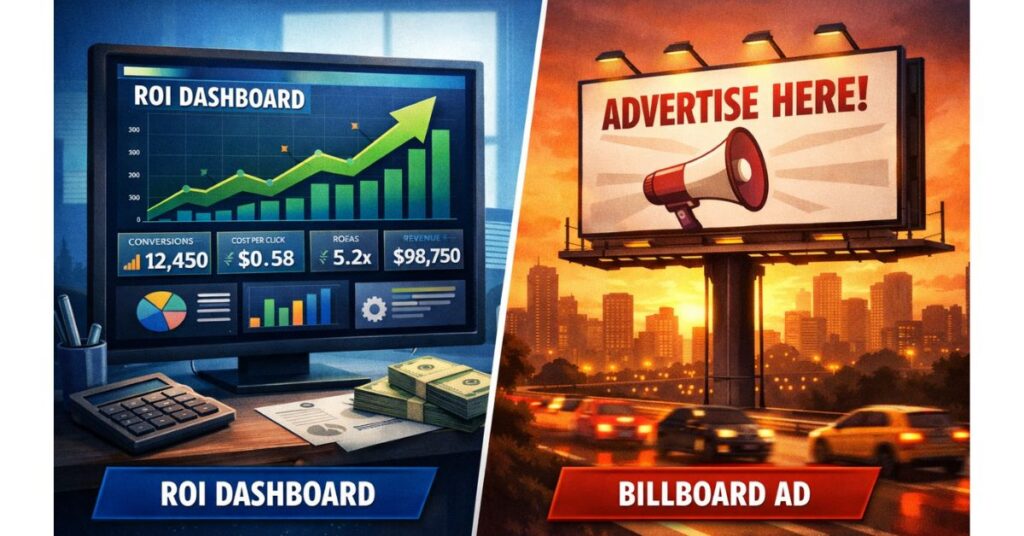
A retail brand investing in TV ads may reach millions but struggle to measure conversions. In contrast, an e-commerce company running Facebook Ads can track every click, sale, and customer journey. For instance, Amazon’s performance-driven campaigns optimize in real time, ensuring maximum ROI compared to traditional blanket advertising.
Why Performance Marketing is Growing Rapidly
Modern businesses want measurable growth. Instead of spending money only for visibility, brands now prefer campaigns that generate trackable outcomes.
1. Real-Time Analytics
Businesses can monitor:
- Click-through rates
- Cost per lead
- Conversion rates
- Audience engagement
- Return on investment (ROI)
This helps marketers optimize campaigns instantly.
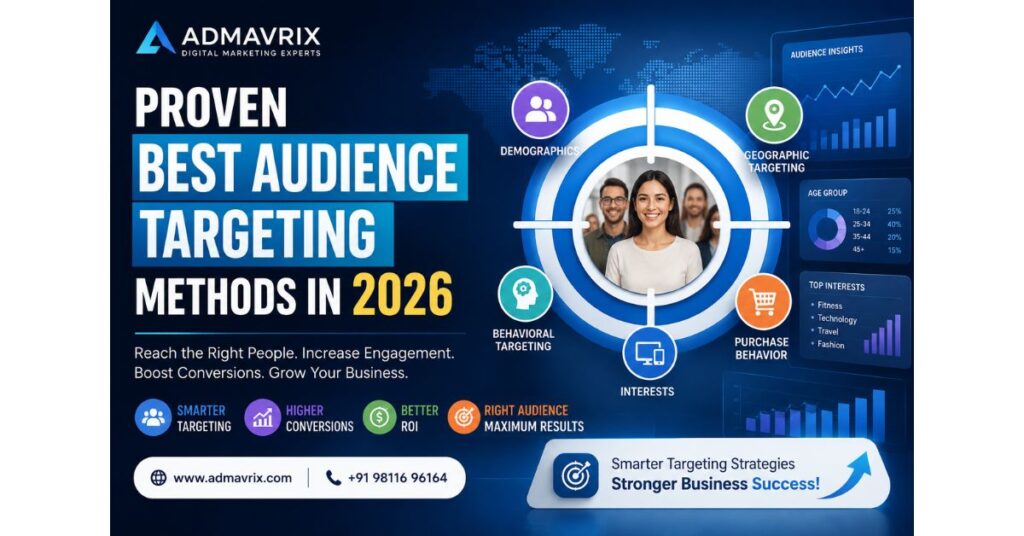
2. Precise Audience Targeting
Digital platforms allow businesses to target users based on:
- Age
- Location
- Interests
- Search behavior
- Online activity
This creates highly personalized campaigns that improve conversion rates.
3. Budget Flexibility
Performance marketing works for both startups and large enterprises. Businesses can scale campaigns based on performance and budget availability.
4. Faster Results
Compared to traditional campaigns, digital ads can generate traffic, leads, and sales much faster.
Which Marketing Strategy is Better?
There is no universal answer.
Traditional marketing still works well for:
- Large-scale brand awareness
- Local political campaigns
- Regional business promotions
- Offline audience reach
Performance marketing is ideal for:
- Lead generation
- E-commerce sales
- Startup growth
- Online brand visibility
- ROI-focused campaigns
In reality, many successful brands combine both approaches to maximize impact.
Contact Admavrix Today to design a marketing strategy that blends the power of traditional branding with the precision of performance marketing.
Visit Admavrix.com to start building campaigns that deliver measurable growth and lasting brand impact.