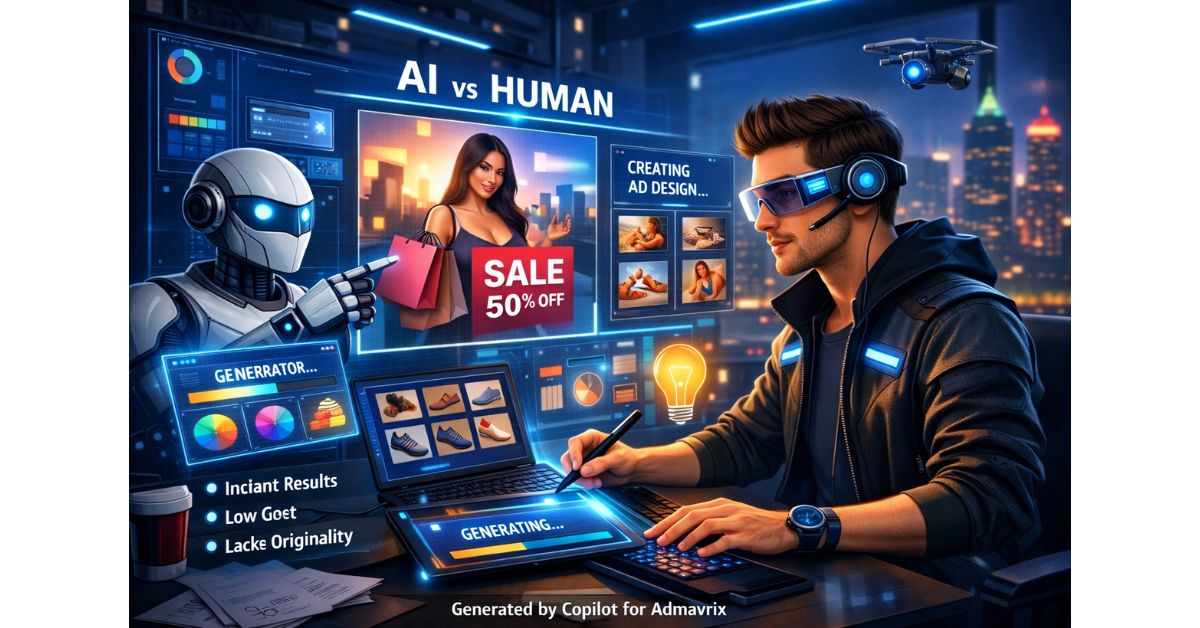
AI image generators are rapidly changing the way brands create ad creatives. What once required hours of design work can now be done in minutes using tools powered by artificial intelligence. From social media ads to banner campaigns, businesses are using AI-generated visuals to save time, reduce costs, and scale content production faster than ever.
But while AI image generators offer speed and convenience, they also come with limitations. Generic outputs, copyright concerns, and inconsistent branding can impact campaign quality if not used correctly.
So, are AI-generated ad creatives the future of digital advertising — or just a temporary trend?
Let’s explore the pros, cons, best tools, and marketing impact of AI image generators in modern advertising.
What Are AI Image Generators?
AI image generators are tools that create visuals automatically using text prompts, templates, or machine learning models. These tools help marketers, designers, and businesses generate ad creatives quickly without advanced graphic design skills.
Popular platforms like, Canva AI, Adobe Firefly, and Microsoft Copilot are making AI-generated creatives more accessible for brands of all sizes.
Key Points About AI Image Generators
- Generate ad creatives in seconds
- Reduce dependency on manual design
- Useful for social media campaigns
- Enable rapid A/B testing
- Help small businesses create professional visuals
- Improve content production speed
- Support personalization at scale
Quick Insights Table
| AI Tool | Best Use Case | Strength | Limitation |
| Canva AI | Social media creatives | Easy to use | Limited uniqueness |
| Midjourney | High-quality artistic visuals | Stunning output | Complex prompts |
| Adobe Firefly | Professional editing | Adobe integration | Premium features |
| Microsoft Copilot | Marketing visuals | Productivity-focused | Less advanced styling |
Pros of AI Image Generators
Speed & Efficiency: Campaigns can launch in minutes.
Cost Savings: No need for large design teams.
Scalability: Generate hundreds of variations instantly.
Personalization: AI adapts creatives to audience segments.
Cons of AI Image Generators
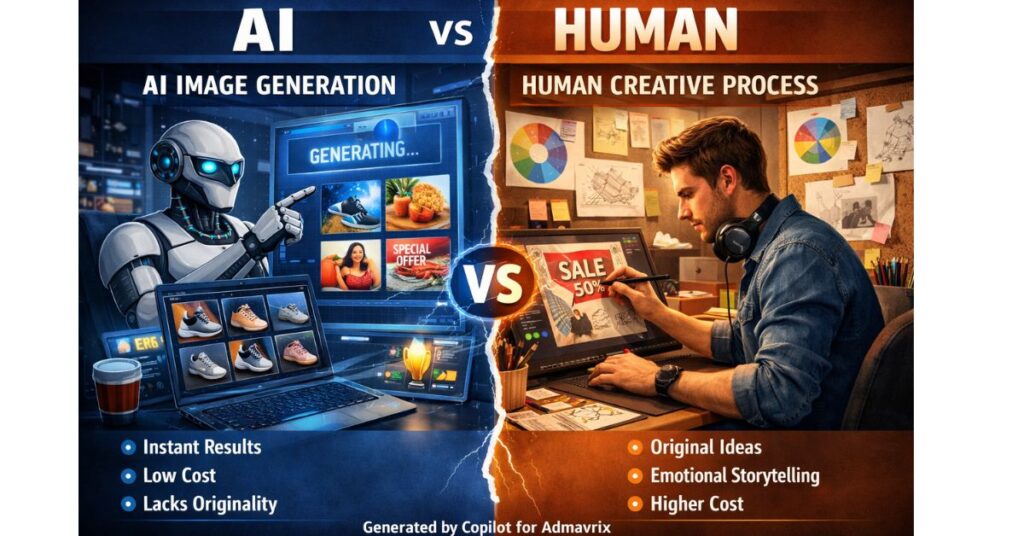
Originality Concerns: Risk of repetitive or generic visuals.
Brand Fit Issues: AI may miss subtle brand guidelines.
Ethical Questions: Copyright and authenticity challenges.
Human Touch Missing: Emotional storytelling is often weaker
Real Example / Case Study
IPL Meme Marketing & AI Creatives
During IPL campaigns, many brands used AI-generated meme creatives to respond quickly to trending match moments.
One sports merchandise brand was created:
- AI-generated player posters
- instant meme ads
- match reaction creatives
Results:
- 38% increase in engagement
- 27% higher CTR
- 21% lower creative production cost
- Faster campaign publishing time
This shows how AI can improve real-time marketing performance when combined with a human strategy.
Conclusion
AI image generators are transforming digital advertising by making creative production faster, cheaper, and more scalable. For brands that want to stay competitive in the fast-moving digital world, AI-powered creatives can provide a major advantage.
However, successful advertising still depends on strategy, storytelling, and emotional connection. The best results come when businesses combine AI efficiency with human creativity.
As AI technology continues to evolve, brands that learn how to balance automation with originality will lead the future of digital marketing.
At Admavrix, we help brands combine AI-powered marketing with performance-driven creative strategies to build campaigns that generate real business growth.
From social media advertising to AI-assisted content creation, our team focuses on creating impactful digital experiences that improve engagement, traffic, and conversions
Contact Admavrix Today at www.admavrix.com to create data‑driven visuals that boost engagement and ROI.